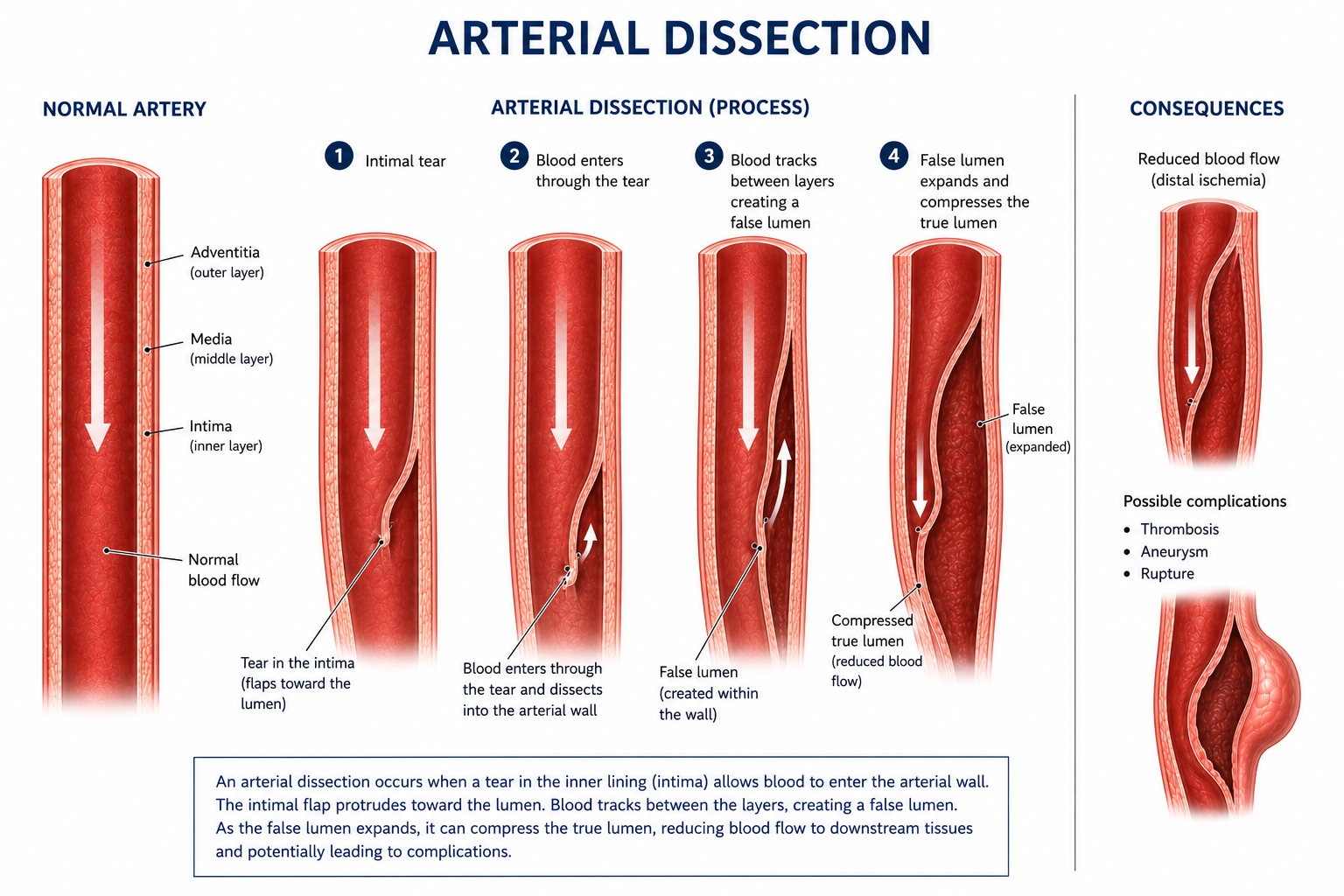
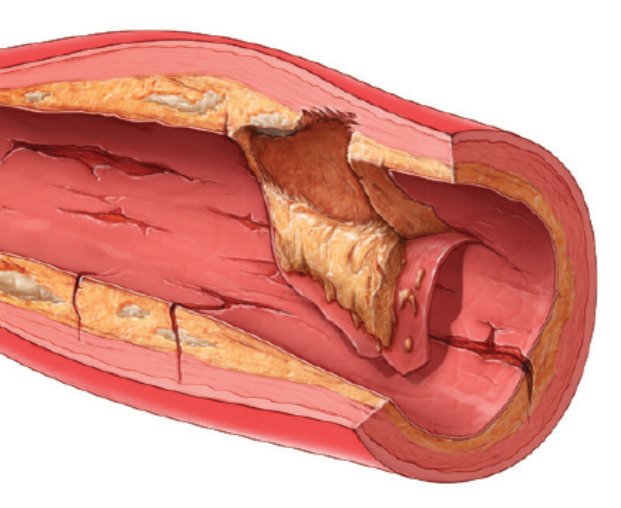
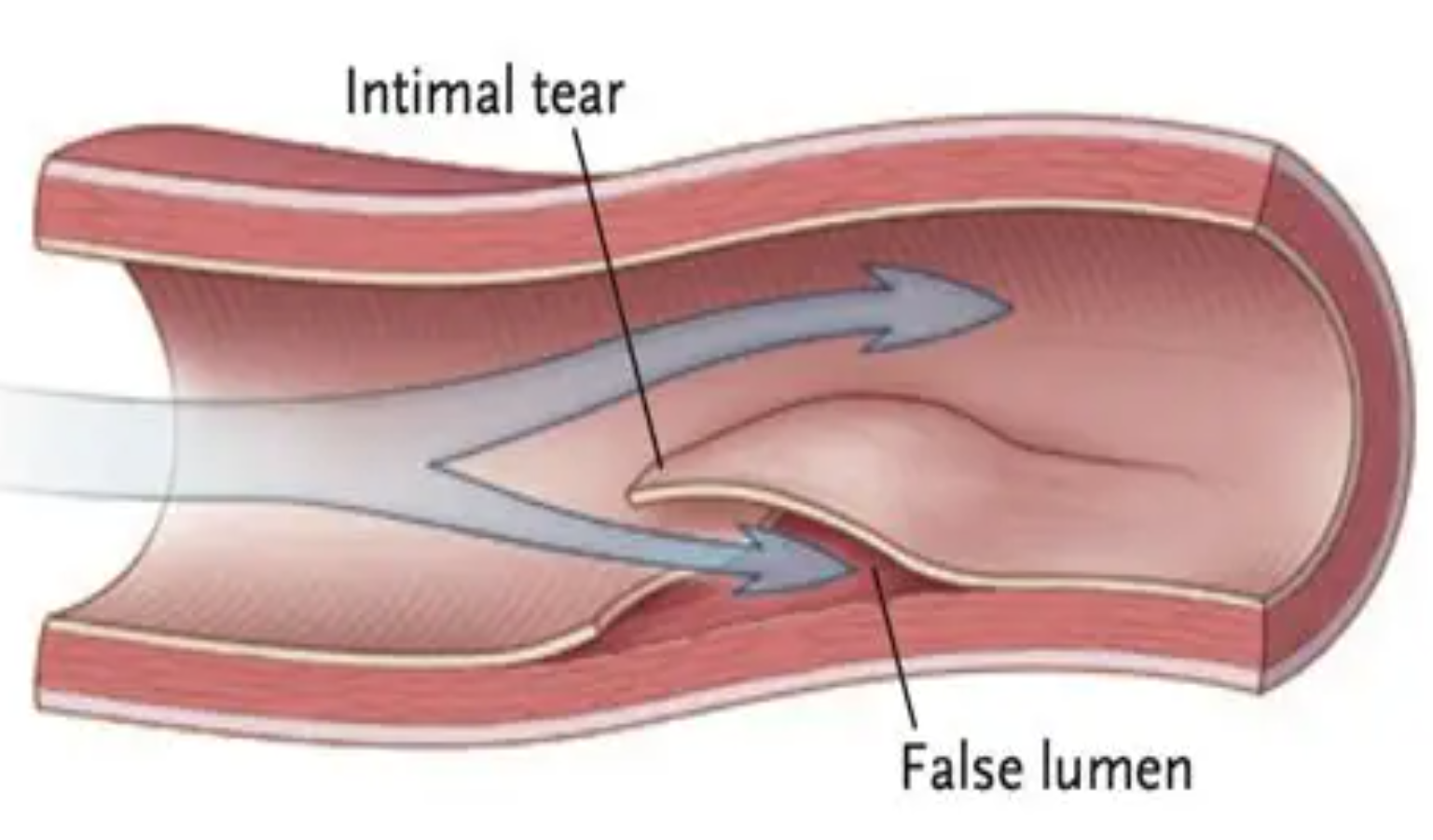
A dissection occurs when a tear develops in the inner lining of an artery, allowing blood to enter the wall of the vessel. This creates a false channel that can narrow or block blood flow to the brain, or form a blood clot that travels upstream and causes a stroke.
Carotid and vertebral artery dissections can happen spontaneously or may be triggered by neck trauma, chiropractic manipulation, or even minor neck movements. They are a leading cause of stroke in younger adults, particularly those under 45.

Dissections can produce a range of symptoms that may develop suddenly or gradually. Recognizing these signs is critical for prompt treatment.

Many dissections can heal on their own with conservative management. Treatment typically involves anticoagulation or antiplatelet medication to prevent blood clots from forming at the site of the tear, combined with careful monitoring. Most patients improve with this approach over a period of weeks to months.
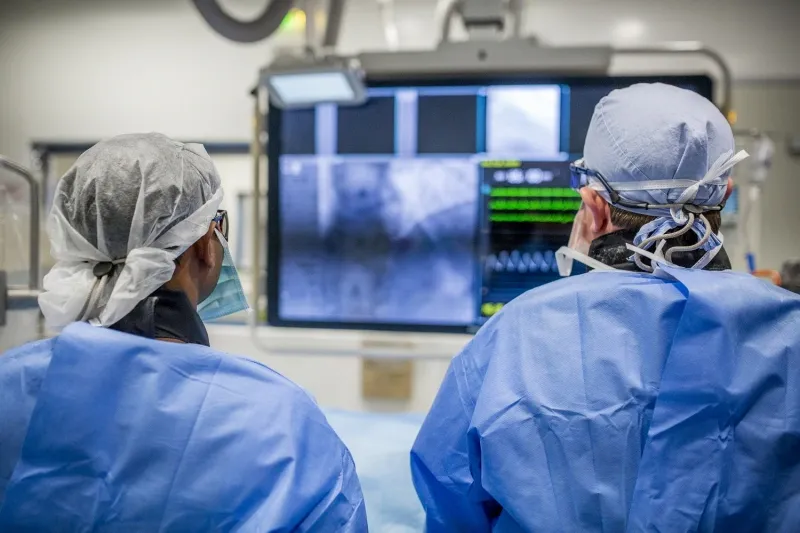
When a dissection causes significant narrowing, blood clot formation, or persistent symptoms despite medical therapy, endovascular repair may be needed. Using catheter-based techniques accessed through a small incision in the wrist or groin, our team can place stents to support the damaged artery wall and restore normal blood flow to the brain — all without open surgery.

The majority of carotid and vertebral artery dissections heal with medical management alone. Understanding what to expect can help ease concerns:

Our team offers several catheter-based approaches, depending on the type and location of the dissection: